
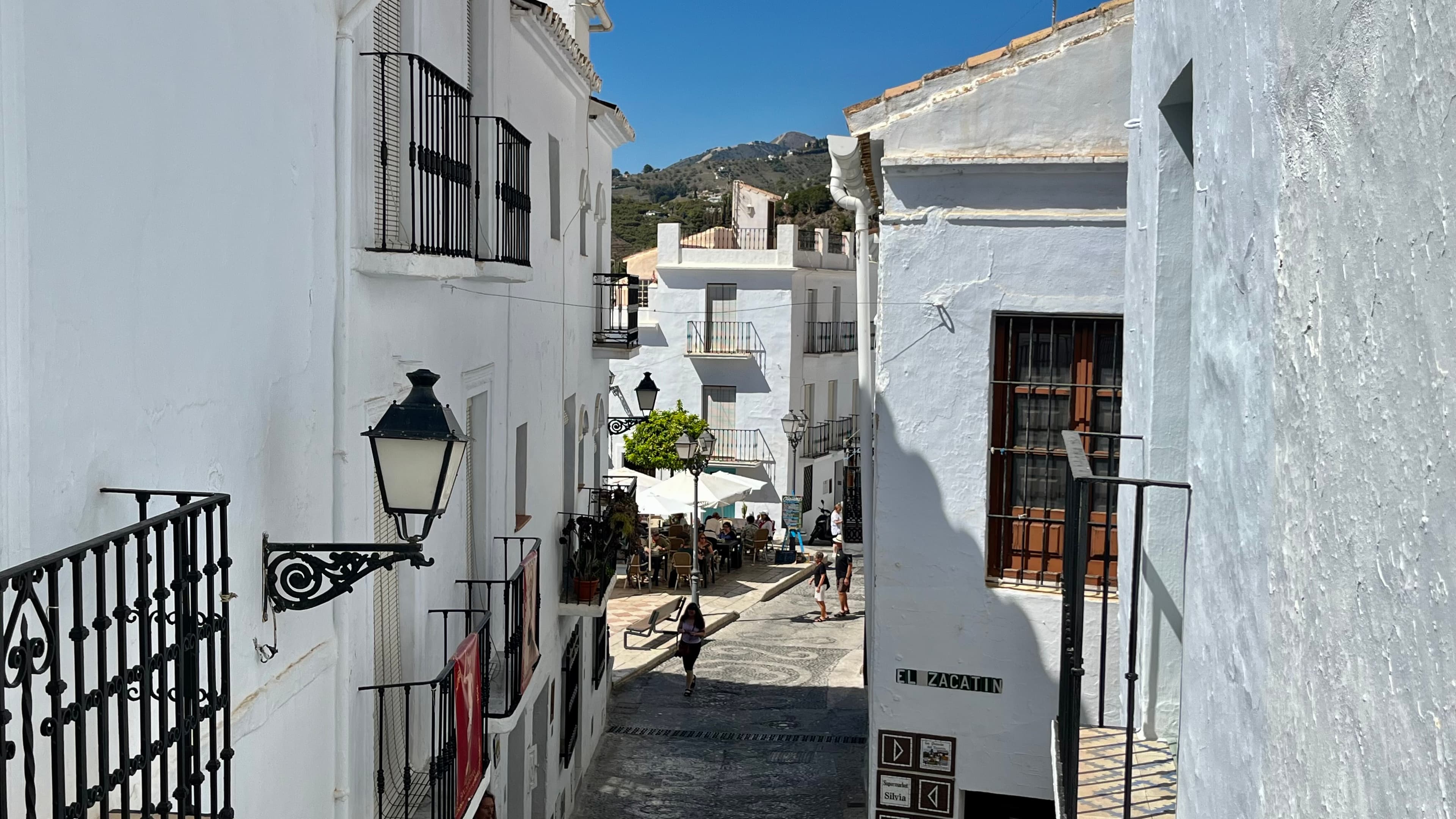
Frigiliana sits fifteen minutes above Nerja and eats differently. The coast does fish and rice; the village does slow stews, goat’s cheese, game from the hills and a sugarcane syrup made nowhere else in Europe. The dining rooms are smaller, the terraces higher, and in the evening, once the day-trip buses have gone, tables appear in lanes barely wide enough for two people. These are the restaurants that justify the drive up, and one that justifies driving further.
Special Rentals Málaga · Updated July 2026
In the old town
Six addresses between Calle Real and Calle San Sebastián, all within a short walk of each other.
El Jardín — Calle San Sebastián, 46
Book the terraceThe terrace looks over the rooftops and down the valley to the sea. The cooking is Andalusian with ambition: sirloin in Pedro Ximénez sauce, peppers stuffed with seafood. Prices reflect the view but stay fair. Reserve a terrace table for the last hour before sunset; eating inside misses half the point.
La Bodeguilla — old town lanes
Honest cookingSimple food done properly: generous portions, fair prices and a shaded terrace with the mountains behind. Local Axarquía wine by the glass. If rabo de toro is on the specials board, order it. Lunch beats dinner here; the shade arrives around two and the village quietens once the day-trip buses leave.
La Taberna del Sacristán — Calle Real, 2
By the churchAt the foot of Calle Real, near the church of San Antonio. The kitchen mixes Andalusian standards with a few of its own ideas: goat’s cheese gratin, almond soup, a slow lamb stew. The street tables watch the whole village walk past. Made for a long lunch.
Al Fuente — Calle Real, 15
The tapas stopA short menu that follows the market. The Galician-style octopus and the slow-cooked pork cheek are the two dishes people return for; save room for the cheesecake. Smaller than its neighbours, so book ahead or arrive early.
La Fábrica — Calle San Sebastián, 36
For fishPrawns pil-pil that arrive still sizzling, whole fish baked in a salt crust, and an egg flan of the kind grandmothers defend. On the same street as El Jardín, without the queue for the view.
Mesón Tres Culturas — Plaza Tres Culturas
On the squareOn the square where the village holds its festival every August. Salmorejo from Córdoba, sirloin with Roquefort, bread pudding to finish. The most traditional dining room of the group, and the easiest place to find a table at short notice.
Worth the drive: El Acebuchal
Twenty minutes further into the hills stands El Acebuchal, a hamlet abandoned after the civil war and rebuilt house by house from the late 1990s by a single local family. Their restaurant (on the Frigiliana–Torrox road, km 6.5) is the reason to come: wild boar, venison, bread from their own oven and croquetas with a serious reputation. Go for a late lunch and walk a stretch of the old muleteers’ path afterwards.
What to order
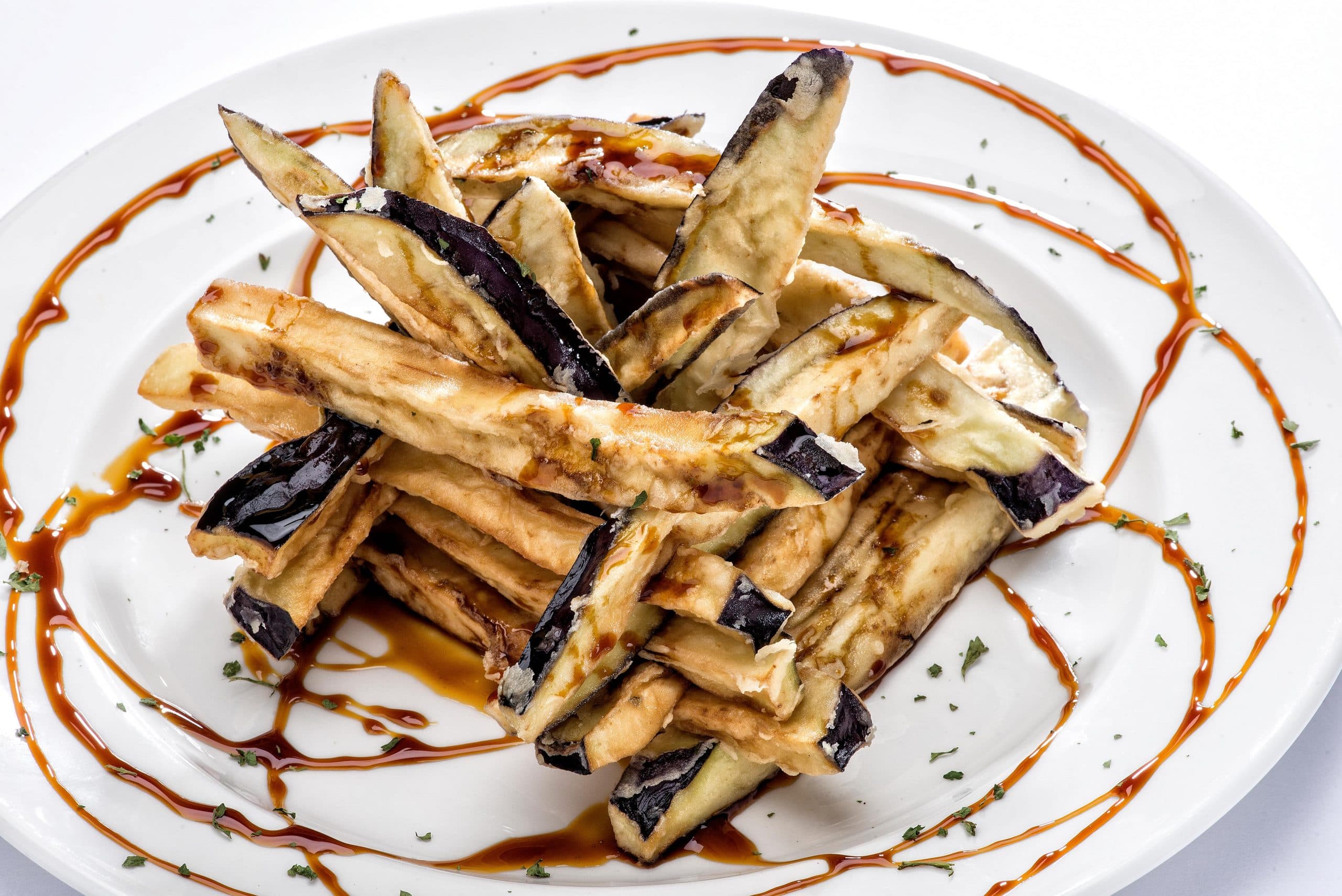
Berenjenas con miel de caña
Fried aubergine with cane molasses. Frigiliana is home to the last working sugarcane honey factory in Europe, El Ingenio, the large 16th-century building at the entrance to the village, and this dish is where its syrup ends up. Order it in every restaurant and compare.
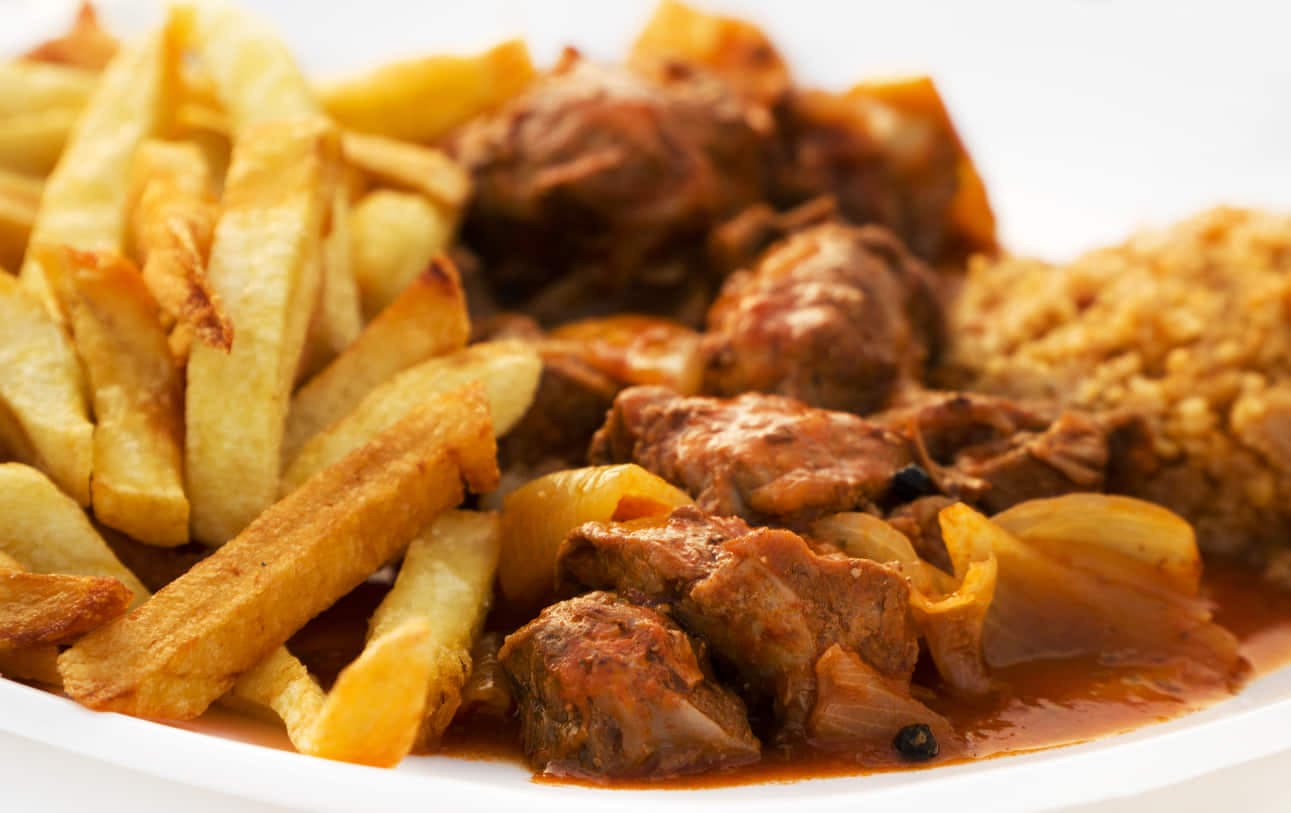
Choto al ajillo
Kid goat fried with garlic, the celebration dish of the inland Axarquía. Heavier than the fish-and-rice cooking of the coast, and exactly right for a village three hundred metres above it.
Moscatel de la Axarquía
The hills around the village still grow moscatel on slate slopes, one of the few places in Spain where they survive. A glass of the dry version alongside the aubergines is the correct order; the sweet one belongs with dessert.
Good to know
- Lunch from 1:30pm, dinner from 8:30pm. Eat earlier and you eat with the other tourists.
- In July and August, book terrace tables a day or two ahead. The rest of the year, walking in works.
- Leave the car at the parking area at the entrance to the village. The old town is stairs and cobbles.
- In late August the Festival Frigiliana 3 Culturas fills every table in the village. Book that week, or come the week after.